

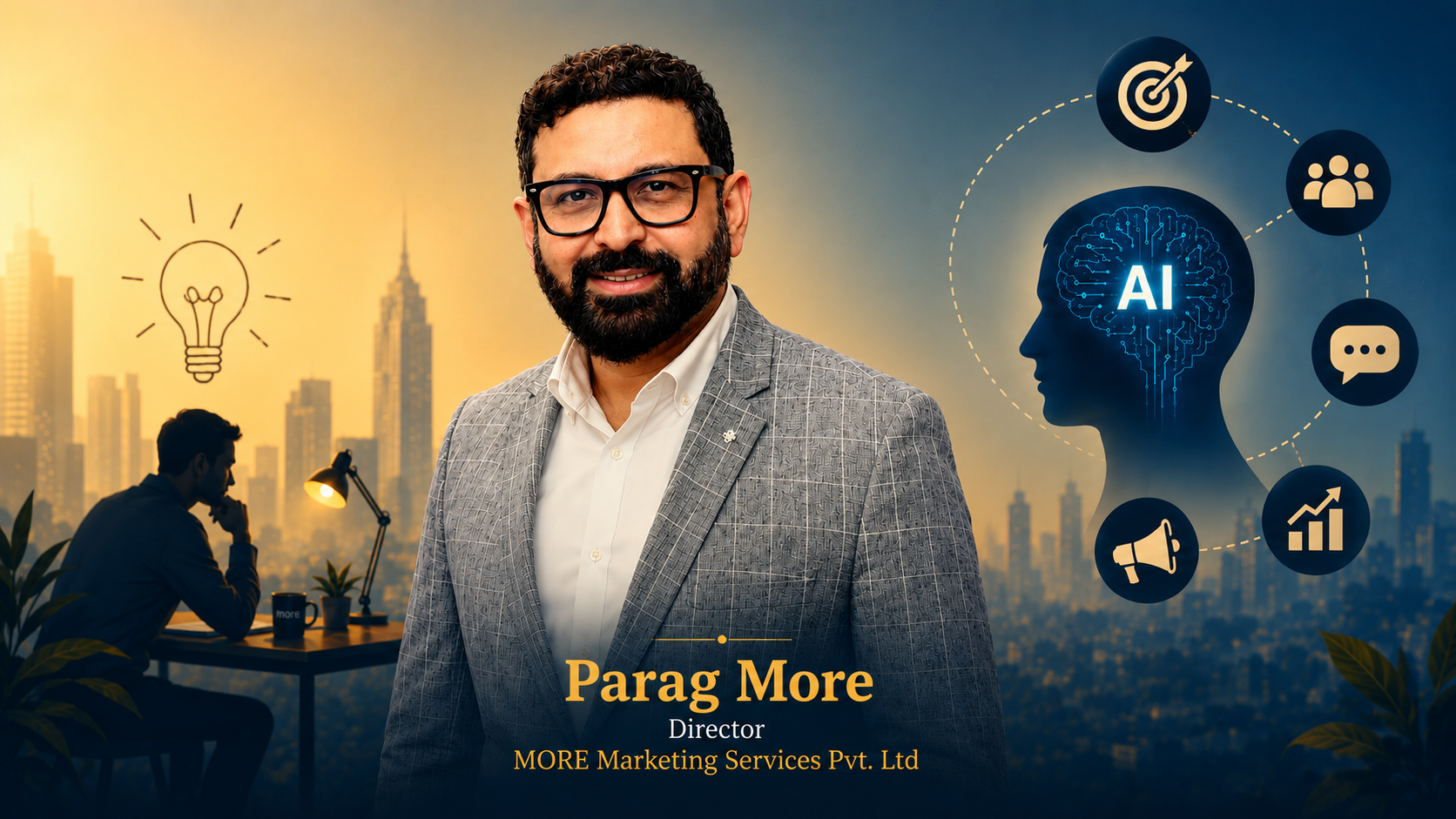
In the AI world, the advertising industry still needs marathon thinkers.
Every day, a new AI tool enters the market. It can write copy, create visuals, generate films, edit videos, build presentations, suggest campaign ideas, and produce content at a speed that was impossible earlier. For advertising agencies, brands, and marketers, this is a powerful shift. But it also creates a dangerous illusion: that faster execution means better ideas.
That is not true.
Advertising has never been only about output. It has always been about insight, imagination, culture, timing, emotion, craft, and consistency. A great campaign is not created because a tool gives ten options in ten seconds. A great campaign is created when a team understands the brand deeply, studies the audience carefully, identifies a sharp truth, and builds an idea that can live beyond one post, one film, or one festive campaign.
That kind of thinking takes time.
This is where marathon thinking becomes important. In advertising, ideas are not just created; they are discovered, shaped, tested, refined, stretched, and built over time. The first thought is rarely the best thought. The obvious route is usually the weakest route. The easy line, the quick visual, and the instant AI-generated concept may look impressive for a moment, but they often lack originality, depth, and long-term brand value.
AI can help the advertising industry move faster, but it cannot replace the discipline of thinking more deeply.
A strong advertising idea comes from understanding what the brand truly stands for. It comes from knowing the consumer's life, language, problems, desires, and hidden motivations. It comes from observing culture, markets, competition, category behaviour, and business realities. It comes from asking better questions before creating better answers.
AI can assist in this process, but dependency on AI alone can make advertising lazy. It can lead to similar-looking visuals, generic copy, predictable campaigns, and work that feels efficient but forgettable. The biggest risk is not that AI will replace creativity. The bigger risk is that people may stop pushing themselves to think originally because AI makes the first answer too easily available.
In advertising, convenience can become the enemy of breakthrough thinking.
Great advertising has always required patience. A powerful idea needs the strength to travel across mediums: print, outdoor, digital, film, radio, activations, social media, retail, and on-ground experiences. It should work as a campaign platform, not just as a single execution. It should build memory for the brand over time. This is why marathon thinking matters. It allows an idea to grow, evolve, and create long-term impact.
The best campaigns are not built by chasing shortcuts. They are built through consistent creative direction, sharp strategy, repeated storytelling, and strong brand understanding. Whether it is a farmer-focused agri campaign, a B2B industrial campaign, an FMCG launch, a financial services campaign, or a regional brand story, the core challenge remains the same: find the truth, simplify it, dramatise it, and repeat it with freshness.
AI can support this journey. It can speed up research, help with references, generate variations, support language adaptation, improve presentation, and reduce execution time. But the soul of the idea must still come from human thinking.
Advertising does not need less thinking because AI has arrived. It needs more thinking.
Because when everyone has access to the same tools, the real difference will not be speed. The real difference will be depth. The industry will not be defined by who generates the most options, but by who finds the most meaningful idea.
AI is here to stay.
But so is the marathon approach to idea creation.
And in advertising, the brands and agencies that continue to think more deeply, build patiently, and protect the power of original ideas will be the ones that win in the long run.


.webp)
.webp)